
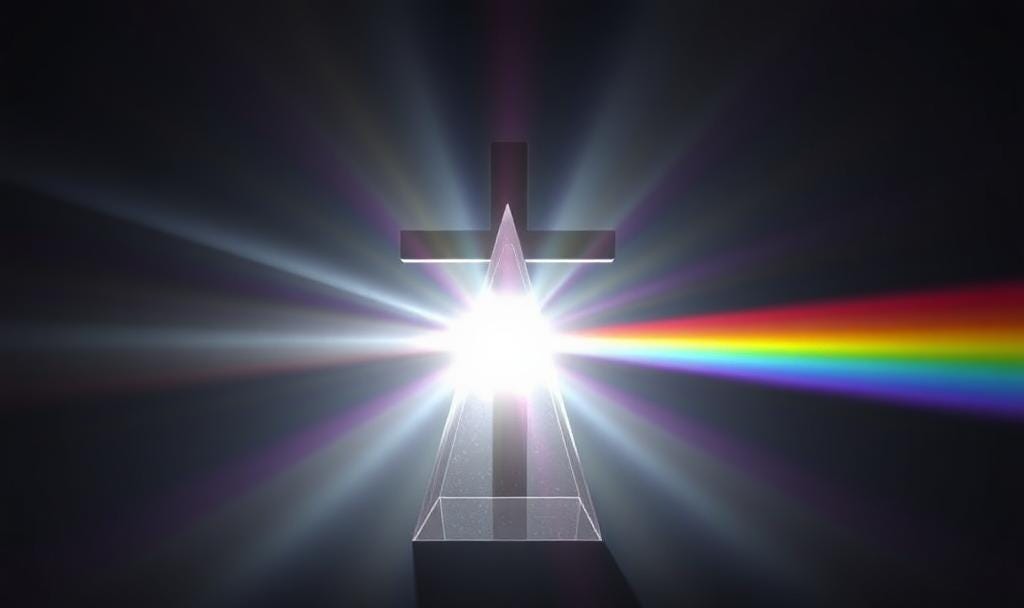
The Christian faith is a tapestry woven with threads of unity, diversity, and the transcendent mystery of God (referred to as the ‘Source’ in Spectralism). "The Divine Spectra," a faith practice that recognizes the Source of existence as beyond gender and inclusive of all humanity, offers profound insights that align beautifully with Christian theology. By embracing the Divine Spectra, Christians can deepen their understanding of God, humanity, and the sacredness of gender diversity.
Created in God’s Image: A Mosaic of Sacred Diversity
Genesis 1:27 declares: “So God created mankind in his own image, in the image of God he created them; male AND female he created them.” This verse does not present a binary but instead highlights the fullness of humanity—a divine reflection of God’s expansive nature. By stating “male AND female” (rather than male OR female), Scripture suggests that all expressions of gender are facets of the divine image. The Divine Spectra reinforces this truth by teaching that each individual embodies a blend of the Sacred Masculine, Sacred Feminine, Sacred Unity and Sacred Void. This holistic view celebrates the diversity of human experience as integral to God’s design.
The rabbinic understanding of Genesis offers further depth. Ancient Jewish texts describe the first human, Adam, as androgynous, embodying both male and female qualities before being separated into Adam and Eve. This interpretation suggests that humanity’s origins reflect Sacred Unity, transcending binary gender distinctions.
Christ’s Radical Inclusivity: Breaking Down Barriers
In Galatians 3:28, Paul declares, “There is neither Jew nor Gentile, neither slave nor free, nor is there male and female, for you are all one in Christ Jesus.” This passage underscores Christ’s mission to dissolve divisions and affirm the equality of all people. The Divine Spectra’s assertion that everyone—cisgender, transgender, and nonbinary—is part of the divine wholeness resonates with this message of radical inclusivity.
The life of Christ exemplifies this inclusivity. Matthew 19:12 offers a profound affirmation of the diverse ways humans experience and express gender, resonating deeply with the principles of The Divine Spectra. In this verse, Jesus acknowledges eunuchs in three forms: those born different, those transformed by external circumstances, and those who choose a distinct path for spiritual reasons. This recognition reveals a compassionate understanding of the wide spectrum of human identity. For adherents of The Divine Spectra, who view the Source of existence as encompassing and transcending gender, this passage underscores the sacredness of individuality, including the experience of transgender and nonbinary people. Jesus’ words embrace those who exist outside traditional norms, demonstrating that gender diversity is not a deviation but a reflection of the divine. This integration of Christ’s teachings and the principles of The Divine Spectra offers a powerful vision of a faith that honors diversity as a sacred gift.
Sacred Roles in Scripture: Gender Beyond the Binary
Throughout the Bible, individuals who defy gender norms play pivotal roles in God’s story. Deborah, the judge and prophetess in Judges 4-5, exemplifies this. As a leader in a patriarchal society, Deborah embodies both the Sacred Feminine and Sacred Masculine, demonstrating that divine calling transcends societal constructs.
Joseph’s “princess robe” (Genesis 37:3, often mistranslated as a “tunic”) serves as another example. This garment, a symbol of favor, also marks Joseph as different, as gender non-conforming. Joseph’s story reminds us that God’s plans often work through those who challenge norms and expectations.
The Divine Rite of Alignment: Gender Affirmation as Sacred Practice
The Divine Spectra teaches that those who experience incongruence between their physical sex and gender identity—and who seek gender-affirming care—are engaging in a sacred act. This practice aligns body, mind, and spirit, reflecting the divine image more fully. Just as the Eucharist is a means of grace in Christian tradition, gender affirmation can be seen as a divine rite that brings individuals into deeper harmony with themselves and their Creator.
This perspective challenges interpretations of Deuteronomy 22:5 (“A woman must not wear men’s clothing, nor a man wear women’s clothing”) often used to condemn gender diversity. A closer reading reveals that this verse addresses cultural concerns about idolatry, not an immutable moral law. Moreover, Christ’s fulfillment of the law (Matthew 5:17) invites Christians to prioritize love and justice over legalism.
The Name of God: A Dual-Gendered Mystery
The Divine Spectra aligns with ancient Jewish understandings of God’s nature. In the Torah, God is described with both masculine and feminine imagery. Deuteronomy 32:18 says, “You deserted the Rock, who fathered you; you forgot the God who gave you birth.” Here, God is simultaneously a father and a mother, reflecting the fullness of divine identity.
Rabbinic interpretations of God’s name, Hu-Hi (“He-She”), further affirm this dual-gendered understanding. The interplay of masculine and feminine in Hebrew grammar reveals a God who encompasses all genders, offering a powerful theological foundation for the Divine Spectra’s inclusive vision.
Beyond Patriarchy: Toward a More Equitable Faith
The suppression of God’s dual-gendered nature in religious traditions is rooted in patriarchy, a construct that has historically marginalized women and gender-diverse individuals. As Christian communities awaken to the harm caused by these systems, they are called to embody the equitable world envisioned in Galatians 3:25-29. This transformation requires recognizing the sacredness of all genders and embracing practices that honor this truth.
Interfaith Insights: Finding God in the Spectra
The Divine Spectra draws wisdom from multiple traditions, echoing Christian mysticism’s emphasis on divine mystery and unity. The six-sided stars of Hinduism, Shintoism, and Judaism symbolize the interplay of male and female energies, much like the Divine Spectra’s Sacred Masculine and Feminine. These intersections invite Christians to see God’s image reflected in the rich diversity of humanity and to celebrate the ways other traditions illuminate aspects of divine truth.
Living the Divine Spectra: A Call to Action
To integrate the Divine Spectra into Christian practice, believers can:
Affirm the Sacredness of Gender Diversity: Recognize that all genders reflect God’s image and celebrate the unique ways each person embodies Sacred Unity.
Support Gender-Affirming Care: Advocate for the rights of transgender and nonbinary individuals to access care that aligns body, mind, and spirit.
Challenge Patriarchal Systems: Work to dismantle structures that suppress our spiritual and physical freedom, creating a more inclusive and equitable Church.
Engage with Interfaith Perspectives: Learn from other traditions to deepen understanding of God’s expansive nature.
Practicing Christian Spectralism
The Divine Spectra offers a profound vision of faith that harmonizes with Christian theology. By embracing the fullness of God’s image—male and female, cisgender and transgender—Christians can participate in the sacred work of reflecting divine love and unity in the world. As a rainbow emerges from pure light, so too does humanity’s diversity emanate from the Source, a testament to the infinite creativity and inclusivity of the Source.
An Invitation to Participate
Subscribe to this free publication to receive regular articles on topics ranging from the spiritual nature of gender to health, culture and science. While we are not an organization as of yet, the Divine Spectra is in the beginning stages of its ministry, and will be building toward 501(c)(3) status in the near future. Please stay connected, and reach out if you have any comments, questions, stories or ideas.
If you feel these articles might interest someone you know, especially if they are a member of a gender minority, please share. All are welcome! Every gender, every race, every nationality, every faith tradition. We are all threads in the tapestry. We all commune with the Source in our own way.